
Choosing between Veterans United and a local Richmond, VA VA loan broker comes down to two things: who processes your file, and who’s on the ground to price it against real Richmond-metro data. Veterans United operates as a single national direct lender with one rate sheet and one underwriting pipeline. A local Richmond broker-lender works differently, pulling wholesale pricing from hundreds of investors to find the sharpest combination of rate and cost for your specific loan amount, credit profile, and closing timeline. This article compares both models on eligibility, pricing, and service so veterans and military families in the Richmond area can make an informed choice before they lock a rate.
Two Ways to Get a VA Loan in Richmond, VA
Veterans United is a large, VA-focused direct lender. It originates loans in-house, services a high volume of VA files nationally, and prices loans off its own single rate sheet. That scale brings a streamlined, largely digital process, but it also means there’s only one pricing source behind your quote. If that rate sheet isn’t competitive on a given day, there’s no second option inside that same company to compare against.
A local Richmond broker-lender operates on a different structure entirely. Rather than pricing loans off one internal sheet, a broker-lender submits your file to a network of hundreds of wholesale lenders and compares live pricing across all of them for the same loan amount and credit profile. The broker then locks whichever investor offers the best combination of rate and closing costs for that specific file. This is the core structural difference between the two models, and it’s the reason pricing can vary meaningfully between a direct lender quote and a broker-shopped quote on the exact same day.
Richmond’s housing market adds another layer to this decision. Median home prices in the city have continued to climb, and mortgage rates have moved in a range that makes even small pricing differences matter over a 30-year term, per Freddie Mac’s Primary Mortgage Market Survey. On a loan in the mid-$300,000s to $400,000s, a rate difference measured in eighths of a percentage point can shift the monthly payment by real dollars and the lifetime interest by tens of thousands. That’s true whether you’re comparing Veterans United’s quote against a broker’s quote, or comparing two wholesale lenders against each other inside the same broker channel.
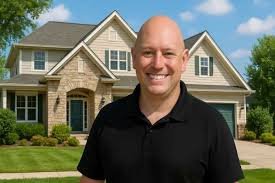
Duane Buziak, NMLS #1110647, works this exact comparison daily as both a broker and a direct lender licensed in Virginia. That dual capability means a veteran’s file can be priced through Duane’s own lender channel or shopped across the wholesale network, whichever produces the better outcome for that specific loan.
VA Loan Eligibility and Richmond-Metro Entitlement Basics
VA loans don’t carry a fixed minimum credit score in the program guidelines published by the Department of Veterans Affairs, but individual lenders, including both Veterans United and local broker-lenders, set their own overlays, and most active VA lenders in 2026 look for a credit profile in the mid-600s or better to approve at competitive pricing. Debt-to-income ratios are evaluated using VA residual income guidelines rather than a hard DTI cap, which gives VA borrowers more flexibility than conventional or FHA buyers in many cases, according to VA.gov’s home loan guidance. The headline feature remains $0 down for eligible borrowers with full entitlement, no monthly private mortgage insurance regardless of down payment, and a one-time VA funding fee that’s financed into the loan.
That funding fee varies by whether it’s a first use or subsequent use of VA eligibility and by the down payment amount at closing. First-time VA borrowers putting down less than 5% pay a higher percentage than those putting down 10% or more, and the fee drops further on repeat use with a larger down payment. Veterans with a service-connected disability rating are exempt from the funding fee entirely, a detail some buyers overlook when comparing lender quotes, per VA.gov’s funding fee schedule.
A common misconception is that VA loans cap the purchase price. They don’t. There is no maximum sales price under current VA guidelines. What matters instead is entitlement: veterans with full entitlement can borrow above any specific dollar ceiling without a down payment, while those with reduced entitlement from a prior VA loan still in use need to understand how the conforming loan limit interacts with their remaining entitlement. For the Richmond metro area, the 2026 conforming loan limit stands at $832,750, according to the Federal Housing Finance Agency. Above that figure with less than full entitlement, a down payment may be required on the portion exceeding the guaranty. This is one area where a local broker-lender’s day-to-day familiarity with Richmond-metro limits can catch entitlement math that a call-center process might miss.
Worked Example: Same Richmond Home, Two Lending Paths
Richmond’s city-wide median home price has moved into the mid-$300,000s as of 2026, based on aggregate city-level data tracked by Zillow. For this example, assume a $375,000 purchase with full VA entitlement, $0 down, and a first-time use funding fee of 2.15% financed into the loan. The funding fee adds $8,062.50, bringing the total financed amount to $383,062.50.
At a 30-year fixed rate in the general range reported by Freddie Mac’s PMMS for 2026, principal and interest on that financed amount lands roughly in the $2,450 to $2,550 monthly range, with no PMI added since VA loans don’t carry mortgage insurance regardless of the down payment amount. Now shift the rate by just 0.25%, a gap that can realistically separate a single direct lender’s rate sheet from the best wholesale price available that same day. On the same $383,062.50 loan, that quarter-point difference changes the monthly principal and interest payment by roughly $55 to $65, and it compounds to tens of thousands of dollars in additional interest paid over the full 30-year term.
That’s the practical stake in comparing Veterans United’s single-source pricing against a broker-shopped rate. Before running a hard credit inquiry to get that comparison, veterans working with Duane Buziak can use a NoTouch Credit Pull to generate a soft-pull, no-obligation payment estimate. It shows where a file likely lands on rate and monthly payment without affecting credit, which makes it a useful first step for anyone holding a Veterans United quote and wanting a real number to compare it against.
Veterans United vs. Local Richmond VA Broker: Side-by-Side
The structural difference between these two models shows up clearly when you line up the categories that actually affect a veteran’s bottom line and closing experience.
| Category | Veterans United | Local Richmond Broker-Lender |
|---|---|---|
| Lender structure | Single national direct lender | Broker-lender with access to wholesale pricing across hundreds of investors |
| Rate-shopping ability | One internal rate sheet | Multiple wholesale rate sheets compared per file |
| Closing cost flexibility | Fixed to one lender’s cost structure | No-out-of-pocket closing options can be structured across different investor products |
| Local market knowledge | Call-center model, not Richmond-based | Day-to-day familiarity with Richmond-metro pricing and entitlement math |
| Underwriting turn times | High volume can extend queue times during peak periods | Turn times vary by investor chosen, often matched to the buyer’s contract deadline |
The core distinction is simple: a direct lender prices your loan one way, off one sheet, every time. A broker-lender compares wholesale pricing across multiple investors for that same file and locks whichever produces the better rate-and-cost combination. Neither model is automatically wrong for every buyer. Veterans who value a single point of contact and a highly standardized digital process may still find that fits their preference. But veterans who want their file priced competitively against the broader market, rather than against one company’s internal numbers, are better served by the broker-lender structure.
For veterans who already have a Veterans United quote in hand, Duane Buziak’s Dare to Compare pricing check runs that existing quote against current wholesale pricing on the same loan amount and credit profile, side by side, so the comparison is based on real numbers rather than a general assumption about which model saves more.
Frequently Asked Questions About VA Loans in Richmond, VA
Does Veterans United always offer a lower rate than a local Richmond broker?
No, rate competitiveness depends on daily market pricing and the specific lender or investor, so a local broker-lender’s wholesale pricing can beat a direct lender’s rate sheet on a given file, or vice versa.
What is the VA funding fee and who has to pay it?
The VA funding fee is a one-time charge financed into most VA loans, and it’s waived entirely for veterans with a VA-rated service-connected disability, per va.gov.
Is there a minimum credit score for a VA loan in Richmond, VA?
The VA itself sets no fixed minimum, but individual lenders, including Veterans United and local broker-lenders, apply their own overlays, typically looking for a mid-600s score or better as of 2026.
Can I use my VA loan benefit more than once?
Yes, VA entitlement can be reused after a prior VA loan is paid off or, in some cases, while a previous VA loan remains active if enough entitlement remains.
Does the Richmond-metro conforming loan limit affect how much I can borrow with $0 down?
Veterans with full entitlement can borrow above the 2026 Richmond-metro conforming limit of $832,750 with no down payment, but reduced-entitlement buyers may need a down payment on the amount exceeding that figure, per FHFA data.
Is there a maximum purchase price on a VA loan?
No, VA guidelines set no maximum sales price; the relevant constraint is the veteran’s remaining entitlement relative to the county loan limit.
Who pays closing costs on a VA loan, the buyer or the seller?
VA guidelines cap certain buyer-paid fees and allow sellers to contribute toward closing costs, and structuring no-out-of-pocket closing options is something a broker-lender can tailor per file.
Can a local broker match Veterans United’s closing speed?
Turn times depend on the investor chosen for a given file, and a broker-lender can select an investor with faster underwriting capacity when a contract deadline requires it.
How do I get pre-approved for a VA loan in Richmond without hurting my credit?
A NoTouch Credit Pull provides a soft-pull, no-obligation payment estimate before any hard inquiry is run, which lets you see likely pricing first.
Are broker-lenders in Virginia actually licensed to do VA loans, or is Veterans United the only VA specialist?
Broker-lenders licensed in Virginia, including Duane Buziak, NMLS #1110647, are fully approved to originate VA loans and can shop wholesale pricing across many investors, so Veterans United is not the only path to VA financing.
The real decision point isn’t which name is more familiar, it’s which structure prices your specific file better: a single national lender working off one rate sheet, or a locally licensed broker-lender comparing wholesale pricing across hundreds of investors for that same loan. Whether you’re a veteran ready to use your hard-earned benefit or a homebuyer exploring your financing options, your path to homeownership starts with expert guidance you can trust. Connect with Duane today for a personalized consultation and discover the mortgage solution tailored to your unique goals in the Stafford County and Richmond area.