
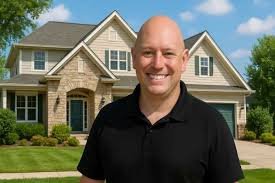
Construction-to-permanent financing is the loan program that makes building a custom home in Richmond, Virginia possible — and it works nothing like the standard purchase mortgage most buyers are familiar with. If you’ve been watching Richmond’s resale inventory and finding that move-in-ready homes at your price point are either gone in days or require compromises you’re not willing to make, building new is a legitimate path worth understanding in full detail.
Here’s the honest framing: land and construction financing involves two distinct phases — a land acquisition component and a construction draw period — that are combined into a single closing event when you use a one-time-close construction-to-permanent loan. That single structure is the focus of this guide. It eliminates the double-closing problem, locks your permanent financing at the start, and gives you a defined path from raw land to a finished, appraised home.
According to Virginia REALTORS city-level data, Richmond’s housing market has seen persistent pressure on existing inventory, which is one reason more buyers are exploring new construction as a viable alternative. When you factor in that the 2026 conforming loan limit for the Richmond metro sits at $832,750 per FHFA, there is meaningful financing headroom for a well-planned build project.
This guide covers how land and construction financing works mechanically, what lenders actually evaluate when they underwrite a construction loan, real payment math tied to Richmond-area project costs, a program-vs-program comparison, VA and conventional paths for veterans and civilians alike, and a full FAQ block. Written by Duane Buziak, NMLS #1110647, this is the complete 2026 reference for Richmond buyers seriously considering building custom.
How Land and Construction Financing Actually Works: The Two-Phase Structure
Most buyers encounter mortgage lending as a single event: you find a house, you apply for a loan, you close, you move in. Construction financing breaks that model entirely. Understanding the two-phase structure before you start shopping land is the single most important preparation step you can take.
Phase One: Land Acquisition
Raw land is treated by lenders as a higher-risk collateral class than improved residential property. A finished home sitting on a lot has a clear, comparable market value. A raw parcel — even in a desirable Richmond-area location — does not have the same liquidity or appraisal clarity. As a result, lenders who offer standalone land loans typically require larger down payments and shorter loan terms than they would for a standard home purchase.
The more important point for buyers pursuing a construction-to-permanent loan: you don’t necessarily need to finance the land separately at all. In a one-time-close construction-to-permanent structure, the land purchase and the construction budget are both folded into a single loan. If you already own the land outright, that equity typically counts toward your required down payment or equity injection at closing — a significant advantage for buyers who purchased land earlier in anticipation of building.
Most conventional mortgage programs do not cover raw land alone. If you’re buying land with the intent to build, the cleanest path is almost always to move directly into a construction-to-permanent product rather than bridging a separate land loan.
Phase Two: The Construction Draw Period
Once the loan closes, funds are not disbursed in a lump sum. Construction financing works through a scheduled draw system: money is released in stages tied to verified construction milestones. Common draw triggers include completion of the foundation, completion of framing, rough-in of mechanical systems (plumbing, electrical, HVAC), drywall installation, and finally the issuance of the certificate of occupancy (CO).
During the draw period, you pay interest only — and only on the funds that have actually been drawn. This is a critical detail. If your total construction budget is $350,000 but only $120,000 has been disbursed so far, your interest-only payment is calculated on $120,000, not the full amount. Monthly carrying costs grow progressively as the build advances.
The One-Time-Close Advantage
A construction-to-permanent loan — also called a one-time-close (OTC) or single-close construction loan — combines both phases into a single loan with a single closing event. You close once before construction begins. The construction draw period runs while your home is being built. When the CO is issued, the loan automatically converts to a standard amortizing mortgage with no second closing, no second appraisal, and no second round of closing costs.
For Richmond buyers managing a build timeline that may run 8–14 months, eliminating the second closing removes a significant risk: the risk that your financial picture changes between the construction phase and the permanent financing phase, potentially affecting your rate or qualification. You lock your permanent loan terms at the start.
Eligibility Requirements: Credit, Down Payment, and What Lenders Evaluate
Construction loans carry different underwriting standards than standard purchase mortgages, and understanding those differences before you apply — ideally before you sign a land contract — saves you from expensive surprises. This is also where using a NoTouch Credit Pull soft-pull pre-approval makes practical sense: you can understand your financing ceiling without triggering a hard inquiry on your credit file, before you’ve committed to a builder or a parcel.
Credit Score Requirements
Construction-to-permanent loans generally carry higher credit score minimums than standard purchase loans. For conventional construction products, lenders typically look for scores in the 680+ range, though requirements vary by lender and program structure. Certain government-backed construction paths may have lower floors — generally around 620 — but the product availability is narrower. The reason for higher thresholds is straightforward: lenders are underwriting a project that doesn’t yet exist as collateral. The finished home is the security, but it won’t exist for months. That forward-looking risk is priced into both the rate and the credit requirement.
If your credit score is near the threshold, this is worth addressing before you apply. A few months of credit optimization before a construction loan application can meaningfully affect both your qualification and your permanent rate at conversion.
Down Payment and Equity Requirements
Down payment requirements for construction loans are generally higher than standard purchase minimums. Depending on the program and the lender’s builder-approval status, you can typically expect to bring 10–20% of the total project cost (or the as-completed appraised value, whichever is lower) to closing. A conventional purchase loan can go as low as 3–5% down for qualified buyers — construction financing does not offer that floor.
If you already own the land free and clear, that equity may count toward your required down payment. This is a meaningful benefit for buyers who purchased land separately. The lender will order an appraisal of the land parcel to establish its current market value, and that figure enters the equity calculation. Note that land equity “may count” toward the requirement — the specific treatment depends on lender guidelines and the loan program. Confirm this with your lender before assuming full credit.
For a review of conventional down payment structures on finished homes, see the Conventional Loan Down Payment Requirements guide for comparison context.
What Lenders Underwrite Beyond the Borrower
This is the part of construction loan underwriting that surprises most buyers. A standard purchase mortgage underwrites the borrower and the property. A construction loan underwrites the borrower, the property, and the builder. Lenders will evaluate:
The licensed general contractor’s credentials: Most construction loan programs require a licensed, insured general contractor. The lender will review the GC’s license status, insurance documentation, and often their track record of completed projects. An owner-builder scenario — where the borrower acts as their own GC — is generally not permitted under conventional construction loan guidelines.
The construction contract: A fully executed, fixed-price or cost-plus construction contract between the borrower and the GC is typically required at application. This document establishes the scope of work, the draw schedule, and the total project budget.
The builder’s draw schedule: The lender will review the proposed milestone-based draw schedule to ensure it aligns with standard construction sequencing and that the budget allocations are reasonable for the scope of work.
The as-completed appraisal: Rather than appraising what exists today (a parcel of land), the lender orders an appraisal of the finished home based on the plans, specifications, and comparable sales in the Richmond market. This as-completed value is what determines your loan-to-value ratio and your maximum loan amount. If the as-completed appraisal comes in lower than your total project cost, you may need to bring additional equity to closing.
Using the NoTouch Credit Pull soft-pull pre-approval early in your planning process lets you establish your financing parameters — including the project budget ceiling your income and credit profile can support — before you’re under contract on land or committed to a builder agreement.
Worked Dollar Example: Building a Home in Richmond, VA
All figures below are illustrative and hypothetical. Actual costs, rates, and loan terms will vary based on your specific project, lender, and market conditions at the time of application. This example is provided for educational purposes only.
Project Setup
Assume a Richmond-area buyer purchases a lot for $150,000 and contracts with a licensed GC for a $375,000 construction budget. Total project cost: $525,000. The lender orders an as-completed appraisal based on the plans and comparable new construction sales in Richmond — the appraiser returns a value of $545,000, slightly above the total project cost, which is a favorable outcome (it means the build pencils at or above cost).
Loan-to-value is calculated against the lower of the as-completed appraised value or the total project cost. In this case, $525,000 is the lower figure, so LTV is calculated against $525,000.
Down Payment Calculation
At 10% down: $52,500 required equity injection. Loan amount: $472,500. This is within the 2026 Richmond-metro conforming loan limit of $832,750 per FHFA, so conventional conforming construction financing applies. At 10% down, PMI will apply during the permanent phase until the loan reaches 80% LTV.
At 20% down: $105,000 required equity injection. Loan amount: $420,000. No PMI on the permanent phase. If the buyer already owns the land free and clear at $150,000, that equity may satisfy a significant portion of the 20% requirement depending on lender guidelines — confirm with your lender.
Construction Draw Phase: Interest-Only Payments (Illustrative)
For illustration, assume a construction interest rate of 7.50% (hypothetical — actual rates vary; reference Freddie Mac PMMS for current rate environment context). Interest accrues only on drawn funds.
After Draw 1 — Foundation complete, $94,500 drawn (20% of loan): Monthly interest-only payment approximately $591.
After Draw 2 — Framing complete, $189,000 drawn (40% of loan): Monthly interest-only payment approximately $1,181.
After Draw 3 — Rough-in complete, $283,500 drawn (60% of loan): Monthly interest-only payment approximately $1,772.
After Draw 4 — Drywall complete, $378,000 drawn (80% of loan): Monthly interest-only payment approximately $2,363.
After Draw 5 — CO issued, $472,500 fully drawn: Monthly interest-only payment approximately $2,953. At this point, the loan converts to the permanent phase.
Permanent Phase: Amortizing Mortgage
Assume the permanent rate locks at 7.00% (illustrative — not a rate promise). On a $472,500 loan at 7.00% over 30 years, the principal-and-interest payment is approximately $3,145 per month.
At 10% down with LTV above 80%, add estimated PMI of approximately $120–$180 per month until the loan reaches 80% LTV. Add estimated property taxes and homeowner’s insurance for a total PITI estimate in the range of $3,800–$4,200 per month — a figure consistent with owning a newly built home in Richmond at this price point. All figures are illustrative; your actual payment will depend on your rate, taxes, and insurance at the time of closing.
Construction Loan vs. Buying Existing: Program-vs-Program Comparison
Before committing to a build, it’s worth seeing the full program picture side by side. The table below compares a construction-to-permanent loan against a conventional conforming purchase loan and a jumbo purchase loan on the key decision variables.
| Feature | Construction-to-Permanent Loan | Conventional Purchase Loan | Jumbo Purchase Loan |
|---|---|---|---|
| Minimum Down Payment | Typically 10–20% | As low as 3–5% | Typically 10–20%+ |
| Credit Score Floor | Often 680+ (conventional path) | 620–640+ depending on program | 700–720+ typical |
| Closing Events | One closing (OTC structure) | One closing | One closing |
| Appraisal Type | As-completed (future value) | As-is (current market value) | As-is (current market value) |
| Rate Lock Timing | At construction close (OTC) | At application or near closing | At application or near closing |
| Builder/GC Required | Yes — licensed, lender-approved | No | No |
| Typical Timeline to Move-In | 8–14 months (permit to CO) | 30–60 days from contract | 30–60 days from contract |
| PMI Applicability | Yes, if permanent LTV above 80% | Yes, if LTV above 80% | Generally no (structure varies) |
The Timeline Trade-Off
Construction projects in the Richmond metro area typically run 8–14 months from permit issuance to certificate of occupancy. That’s a meaningful commitment compared to a 30–60 day standard purchase close. The trade-off is a home built to your specifications, with new systems under warranty, in a location you chose deliberately. For buyers who are flexible on timing and specific about what they want, the timeline is a planning consideration rather than a dealbreaker.
The Rate-Lock Challenge
Here’s where construction financing requires extra attention. Most lenders cannot lock a 30-year permanent rate at application for a project that won’t reach the permanent conversion phase for 10 or more months. Rates can move significantly over that window. The one-time-close structure addresses this more effectively than a two-close approach: with OTC, you lock your permanent rate at the initial construction closing, often with a float-down option that allows you to capture a lower rate if the market improves before conversion. A two-close approach — a separate construction loan followed by a separate permanent mortgage — leaves you fully exposed to rate movement at the second closing. For most Richmond buyers, the OTC structure is the more rate-certain path.
VA and Conventional Paths for Richmond Veterans and Buyers Building New
VA Construction-to-Permanent Loans
Veterans and active-duty service members have a meaningful option here that many don’t know exists. The VA does guarantee construction loans, as documented at va.gov. A VA one-time-close construction loan allows eligible veterans to build a primary residence using their VA entitlement — with no down payment required in many cases, subject to entitlement availability and lender requirements.
The important caveat: fewer lenders offer VA construction products than standard VA purchase loans. The underwriting complexity and the draw management process lead many lenders to decline this product. Working with a broker who has access to hundreds of wholesale lenders significantly increases your chances of finding a lender that actively originates VA construction loans in Virginia.
The VA funding fee applies to construction loans just as it does to standard VA purchase loans. The fee amount varies based on your down payment and whether it’s your first or subsequent use of the benefit — refer to the VA Loan Funding Fee Chart for current figures. One additional requirement specific to VA construction loans: the builder must be VA-approved. This is an eligibility nuance that affects which GCs you can work with, so confirm builder approval status early in your planning process.
For veterans in the Richmond area, the combination of no-down-payment eligibility and the one-time-close structure makes VA construction financing a powerful option — when you can find a lender that offers it. See the VA Home Loan for Veterans page for full program context.
Conventional Construction Products: Conforming Loan Limits
Standard conforming construction-to-permanent loans follow Fannie Mae and Freddie Mac agency guidelines. The 2026 Richmond-metro conforming loan limit is $832,750, per FHFA. This limit applies to the as-completed appraised value of the finished home — not just the land or the construction budget in isolation. If your total project results in an as-completed value at or below $832,750, conventional conforming construction financing is available to you.
This limit matters for project budget planning. A buyer building a $700,000 as-completed value home in Richmond is well within the conforming envelope. A buyer whose project is projected to appraise at $900,000 is in jumbo territory and will face different underwriting standards.
Jumbo Construction Financing for Higher-Value Richmond Builds
Projects where the as-completed appraised value exceeds $832,750 require jumbo construction financing. Jumbo construction loans carry different underwriting standards than conforming products: lenders typically require larger cash reserves (often 12 months of PITI in liquid assets post-closing), higher credit scores, and more detailed documentation of the borrower’s financial picture. Fewer wholesale lenders offer jumbo construction products, which makes lender access a meaningful differentiator for high-value builds.
If your Richmond build is projected to fall in the jumbo range, review the Jumbo Loans Richmond Buyers Guide for additional context on underwriting standards and reserve requirements at this loan size.
8 Questions Richmond Buyers Ask About Land and Construction Financing
Q: Can I use a VA loan to build a house in Virginia?
Yes. The VA guarantees construction loans for eligible veterans and active-duty service members, as confirmed at va.gov. Fewer lenders offer this product than standard VA purchase loans, and the builder must be VA-approved, so lender selection is critical.
Q: What credit score do I need for a construction loan in Richmond, VA?
Conventional construction-to-permanent loans typically require a credit score of 680 or higher, though requirements vary by lender and program. Some government-backed construction paths may allow scores as low as 620, but product availability is more limited at lower score thresholds.
Q: How does a construction-to-permanent loan work?
A construction-to-permanent loan closes once before construction begins, funds the build through a milestone-based draw schedule with interest-only payments, and automatically converts to a standard amortizing mortgage when the certificate of occupancy is issued — with no second closing required.
Q: Can I use land I already own as a down payment on a construction loan?
Land equity may count toward your required down payment or equity injection, depending on lender guidelines and the program. The lender will appraise the land to establish its current market value, and that figure enters the LTV calculation. Confirm the specific treatment with your lender before assuming full credit.
Q: How long does it take to close a construction loan in Richmond?
The initial closing on a construction-to-permanent loan typically takes 45–60 days from application, similar to a standard purchase loan. The full timeline from initial closing to moving in — including the construction period — is typically 8–14 months depending on project scope and permit timelines.
Q: What happens if my builder goes over the construction budget?
Cost overruns are the borrower’s responsibility. Most lenders require a contingency reserve — typically 10–15% of the construction budget — built into the loan structure or available as liquid reserves. If costs exceed the original budget and contingency, you will need to bring additional funds to cover the gap before the lender will release final draws.
Q: Do I need a licensed general contractor to qualify for a construction loan?
Yes, for virtually all conventional and government-backed construction loan programs. The GC must be licensed, insured, and typically approved by the lender. Owner-builder scenarios — where the borrower serves as their own GC — are generally not permitted under standard construction loan guidelines.
Q: What is an as-completed appraisal and how does it affect my loan amount?
An as-completed appraisal values the finished home based on the approved plans, specifications, and comparable new construction sales — before the home is built. This value determines your maximum loan amount and LTV ratio. If the as-completed appraisal comes in below your total project cost, you may need to bring additional equity to closing to maintain an acceptable LTV.
Putting It All Together: Your Next Step Toward Building in Richmond
Land and construction financing is one of the more complex mortgage products in the market — but it’s also one of the most powerful tools available to Richmond buyers who want to build exactly what they want rather than settle for existing inventory. The framework is straightforward once you understand it: two phases, one closing, one set of loan terms locked before the first nail is driven.
The decision framework before you act is equally clear. Understand your financing ceiling before you sign a land contract. Confirm your builder is licensed and lender-approvable before you commit to a GC. Know whether your project will fall within the $832,750 conforming limit or require jumbo construction financing. And if you’re a veteran, ask specifically about VA one-time-close construction products — the product exists, it’s powerful, and most buyers don’t know to ask for it.
The logical first step is a NoTouch Credit Pull soft-pull pre-approval. This gives you a real financing ceiling — based on your actual credit profile and income — without a hard inquiry on your credit file. You’ll know your maximum project budget, your likely down payment requirement, and whether any credit optimization steps are worth taking before you apply. That information is what lets you shop land and engage builders from a position of knowledge rather than guesswork.
Connect with Duane today for a personalized consultation on construction-to-permanent financing in Richmond, VA. Whether you’re a veteran ready to use your VA benefit to build, a first-time buyer exploring new construction as an alternative to tight resale inventory, or an established buyer planning a higher-value custom build, the path starts with a conversation.
One Response